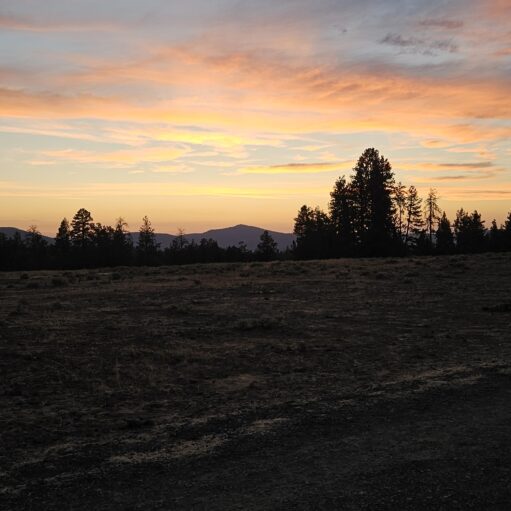

Would you like to have your photos featured here? We would too!
All you have to do is join the
Oregon Star Party Flickr Group.
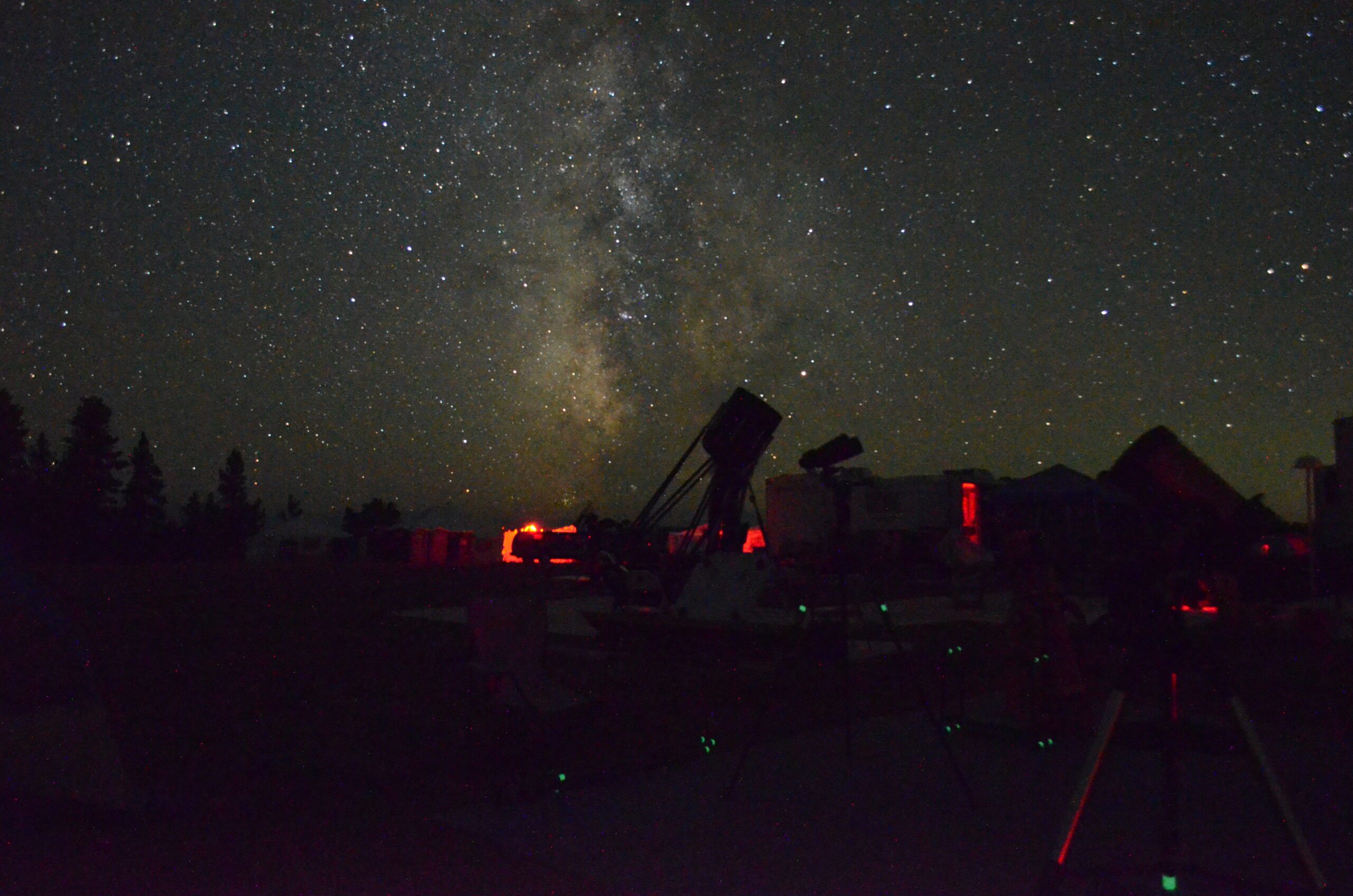
Every summer, amateur astronomers gather in the high mountains of central Oregon at a place called Indian Trail Spring in the Ochoco National Forest. Astronomers from all over the world enjoy the warm friendly atmosphere and some of the darkest skies in the United States. If you would like to read more about the Oregon Star Party head over to the About Us page.
Oregon Star Party would not happen without a tremendous effort from volunteers. If you would like to lend a hand, you can read about the opportunities and drop us a line from the Volunteer page.
Steve Coe: Wide Field Astrophotography
With a just a camera and some lenses of varying focal lengths, you can take wide field images of the sky. There are a variety of targets from the swath of Milky Way to many favorite deep sky targets. Steve’s presentation will cover how to get into this rather simple aspect of astrophotography. For those not interested in the "how to" portion of shooting wide fields, there are lots of pretty pictures of comets, conjunctions and the brightest deep sky objects to enjoy during his talk! An avid observer of the night sky, Steve has lived in Arizona for 30 years. He is the author of a new book, "Touching the Universe," and has written for Astronomy Magazine and the Cloudy Nights website. This is his third trip to OSP.
Jessica Vineyard: The Naked Truth about the H-R Diagram
Join Jessica Vinyard, aka Ms Galaxy, for this entertaining, educational, and maybe even a little bit flirtatious presentation on just how much information this sexy little chart contains. Ms Galaxy’s multi-media extravaganza may stimulate and shock you, perhaps even inspire you to seek your own Hertzsprung- Russell diagram (suitable for framing). Appropriate for all ages and experience levels, so bring the family! Ms. Galaxy has been an avid amateur astronomer for 20 years. Her love of stellar evolution is evident in her apparent obsession with the Hertzsprung-Russell diagram. Jessica founded the Southern Oregon Skywatchers Astronomy club in 1993, co-hosted "The Milky Way Starlight Theater" on Jefferson Public Radio, has been an astronomy columnist, and most recently taught courses for inquiring minds in Ashland. Her continued passion in astronomy education is evident in her current online courses and blog.
Howard Knytych: Limiting Magnitude
Howard is a longtime member of Rose City Astronomers and an Oregon Star Party committee member. He will demonstrate the magnitude of the stars as the sky darkens and the dim stars become more visible.
Dave Powell: A Stroll through the Night Skies, part 1 - 802 Circle
With a green laser pointer, Dave will show you around the night sky as he identifies constellations and stars while telling stories from mythology and history. While Dave includes general information each night, no two presentations are ever the same.
Dave is Oregon Star Party's new director. He conducts night sky programs annually at Oregon Star Party, adding humor, mythology, and history to his programs. A retired police officer, Dave has received the Astronomical League's Master level award for public outreach.
Neal Heacock: Advanced Image Processing
Neil Heacock is an IT professional who moved out of the city lights to a rural area of Clark County where he really saw the stars. This gave birth to a strong interest in astronomy which continues to grow and develop. Over the past 8 years, Neil's imaging skills and processes have continually increased and he has given instructional presentations and lab style software trainings for 6 local astrophotography conferences and workshops primarily focusing on DSLR imaging. A collection of Neal’s images can be seen at his image gallery.
Peter Abrahams: Robotic & Automated Telescopes
Automatic (robotic) telescopes are not simply remotely operated, but involve some level of machine intelligence, enabling a telescope to act without the direct initiative of an operator. Examples include a telescope that senses weather, initiates, slews to a pre-programmed list of stars for photometry, then shuts down after the night; or a space-based gamma ray telescope that triggers a land-based optical telescope to slew to a gamma ray burst and observe the spectrum of the object. From his Portland home, Peter Abrahams studies the history of the telescope. More an armchair astronomer than an eyepiece astronomer, Peter recently sold his 16 inch dob to gain storage space and now owns a 6 inch Mak and a few old (Old) refractors. Meanwhile, there are dozens of interesting subjects in the history of binoculars and telescopes to occupy his time. In particular, the history of amateur astronomy in the Portland area includes some fantastic telescopes that need more attention. Papers and bibliographies can be found on his web site.
Mel Bartels: Telescope walkabout
Mel writes: In elementary school, for an assignment titled "If You Could Make Two Wishes and Have Them Come True, What Would They Be?" I wrote "My first wish would be to have a flying saucer that had telescope in it. My second wish would be to be a great music player." Well, I am an amateur astronomer, I played trumpet professionally for many years, and have a pilot's license, so, pretty darn good! Currently, Mel is a software development manager for a software company in Eugene, Oregon.
Chris Ford: 3D Visualization of Astronomical Objects, or How Buzz Light-year Helped Add another Dimension to the Universe
3D computer graphics is revolutionizing the way that both professional and amateur astronomers are visualizing the real Universe. Tonight, Chris Ford, an avid amateur astronomer and astrophotographer, will connect the technology of Hollywood visual effects with astronomical visualization, demonstrate how it is used to interpret the science for the wider public, and show how current trends are leading to a future of fully immersive experiences that promise to be out of this world. Chris Ford is currently RenderMan Business Director at Pixar Animation Studios (Walt Disney Co) and has managed most of the professional CG modeling, animation, and rendering software tools used in feature film special effects, animation, broadcast, and scientific visualization. Prior to Pixar between 2002 and 2005, Chris was Director of Product Management at Autodesk for all 3D media software products, and between 1997 and 2002 Senior Maya Product Manager at Alias|Wavefront (Silicon Graphics) where he introduced the Academy Award winning Maya, now the markets dominant digital media content creation software.
Alvin Huey: Observing Galaxy Groups
Let Alvin Huey, a long-time visual observer, take you on a survey of various lists and catalogs of galaxy groups and clusters for observers with small and large telescopes. He will cap the presentation with some tips and tricks in teasing out detail and threshold galaxies.
Attending Oregon Star Party is the perfect opportunity to observe the night sky! In order to encourage observing at the Oregon Star Party, we develop three different observing programs each year, each with its award certificate and pin. Anyone registered for the star party is eligible to participate.
Level 1
The best way to enjoy the unique beauty of the dark skies at Oregon Star Party is to view bright Messier objects, popular double stars and planets. The objects listed in this list are easily visible in any telescope or binoculars - perfect for thos who are just getting started. To receive the OSP Level 1 Observer pin and award certificate, you must observe and record at least 20 of the 25 listed objects while you are at OSP. As an added reference, each objects page number in teh popular Sky & Telescope's Pocket Sky Atlas (PSA) is listed in the right-hand column.
All of the listed objects are visible between sunset and 2 a.m. Go-to telescopes and image enhancers (photography) are not permitted for the OSP Level 1 award. You may get assistance in locating the objects on the star charts or through other finders, but you should position on the object directly. Looking through another scope, in which the object is already sighted, is not acceptable.
2011 Level 1 printable listLevel 2
The Level 2 list is a 5x5 list which includes 5 objects from each of 5 object classes, and has been designed to be completed over 2 nights. To qualify for the OSP Level 2 Observer pin, you must observe at least 16 of the 25 objects while at OSP. The list can be completed with an 8" telescope. Go-to and image enhancers (photography) are permitted at OSP for the Level 2 award. An LA or IE will be indicated on the award certificate and OSP web site’s list of award winters. In the list below, the column marked "PSA" indicates the page number from the popular Pocket Sky Atlas.
When sketching objects, remember that stars drift east to west and north is located 90 degrees CCW from west in your eyepiece (for a Newtonian reflecting telescope). Each double star pair must be sketched with north on top.
This year, we encourage everyone to describe and sketch each of the objects into the Observer Log Sheet. The blank log sheet is available on the OSP webpage to download and print. It will also be included in the OSP Observer Guide. A limited quantity will also be in the Information Tent. If you prefer, you may instead use your own log book. Keep your drawings simple, and be sure to label your objects with descriptions, colors or anything else you noticed. When finished, bring the list to the Information Tent to receive your OSP Level 2 Observer pin before noon on Sunday.
2011 Level 2 printable listLevel 3
As an advanced level list, advanced preparation is required to successfully complete the observations. This preparation includes creating detailed finder charts, researching certain features online, and becoming familiar with the targets on the list. A sketch of each object is strongly encouraged, for any object that is not sketched a sufficiently detailed description of the observation so that there is little doubt of the positive identification. It is recommended that you have detailed star charts available When it comes to advanced observing lists a large aperture scope is usually required. GoTo scopes and image enhancers (photography) are permitted at OSP for the OSP award. A "LA" (Location Assisted) or "IE" (Image Enhanced) will be put on your certificate and the OSP webpage if either one of these are used.
2011 Level 3 printable listObserving Program Rules
All observations must be made at Indian Trail Spring during the week of Oregon Star Party. This year, we encourage everyone to describe and sketch each of the objects into the Observer Log Sheet. A blank log sheet is available below to download and print. It will also be included in the OSP Observer Guide. A limited quantity will also be in the Information Tent. If you prefer, you may instead use your own log book. Observations may be carried over to the next year if you did not complete them in one year, but they must be made at ITS during OSP.
An observation record must include:
When finished, bring the list of observations to the Information Tent before noon on Sunday, where a committee member will go over your record. Those participants who successfully complete a program will receive a Certificate showing their accomplishment. A beautiful "OSP Observer" level lapel pin will be available for purchase once you have completed a list. Your name will also be displayed on the Oregon Star Party webpage as an Observing award winner.
Still Have Questions? Contact the Award Committee for more information.
Welcome to the OSP First Timers page. My first experience at OSP was in 2003. It was hot and dusty (still is) with beautifully dark skies. After a week of meeting new friends and working on an observing list, I almost didn't want to leave this beautiful place. So that you may fully enjoy your time at OSP, here are a few OSP pages you may want to read while planning your week under the stars.
- On the @OSP page, read and become familiar with information about camping, water, food, fire and what to bring and what to leave home. Download and become familiar with maps of the OSP site.
- On the HOME page, become familiar with the DRIVING DIRECTIONS, and carefully follow the driving instructions from Prineville. Some people have reported that using a GPS has taken them on an incorrect route, across the country on a forest road. The route is well signed with OSP signs at every turn after Prineville. The mileage instructions from Prineville are accurate.
- Try to plan you trip so you arrive before dark, which is at about 8pm. Keep in mind that finding your way on a Forest Service road after dark can be difficult. The OSP gate at the entrance is closed at 8pm to prevent car lights from shining on the observing areas. If you do arrive after 8pm, you will need to camp outside the OSP gate until morning.
- If you have a new telescope, ask others camping around you for help or sign up for the adult or youth mentoring programs listed on the ACTIVITIES page. Mentoring activities are lead by OSP committee members experienced in mentoring new observers. Take advantage of their knowledge, and sign up for a session!
- Astronomers stay up all night and sleep during the day, so please be considerate of other astronomers and observe the quiet hours until 10:30am.
- Oregon Star Party is located in the heart of the Ochoco National Forest, a beautiful part of Eastern Oregon. In addition to learning a lot about astronomy and telescopes, there are many other activities available in the area including hiking, geocaching, and swimming in local lakes.
So, that's it. Introduce yourself to Director Dave Powell and other members of the OSP committee. We all wear tie-dyed OSP committee t-shirts and so are easy to find. Don't hesitate to stop and ask us questions!
Let us know your thoughts during and after OSP.
Clear skies!
Ken Cone
OSP Webmaster
Remember: sunset at this time of year is around 8:00 PM. Please try to arrive before dark. But if you are unable to do so, be cautious of deer or other animals on the roads, particularly around dusk or dawn. Anticipate an hour drive from Prineville to the site. Roads are paved except for the last four miles, which are gravel and in good shape.
Please check the Oregon Department of Transportation web page tripcheck for up-to-date road information. The link for Incident Maps will take you to a 9 section grid. The Indian Trail Spring site is in Central Oregon. The site is east of Prineville along Highway 26.
Contact us, if you need additional directions. A good idea is to pick up either a Pittmon’s map for Crook County, or a National Forest Service map of the Ochoco's for detailed information about the area.

For a printable map with driving directions, click here
Coming from places east of Indian Trail Spring, there are several options. From the north and east several good paved roads lead eventually to the town of Mitchell along Hwy 26. It is recommended that those coming in from this direction continue west on Hwy 26 to the turnoff for the Ochoco Ranger Station Road.
There are several gravel Forest Service roads that can be taken if one has an Ochoco National Forest map and feels comfortable with navigating back roads. But it is always a good idea to contact the Forest Service right before OSP to make sure these roads are open. From the southeast, the main roads will take you through Bend and then to Prineville. Hwy 27 is a shortcut available off of Hwy 20 to Prineville, it is graveled from Hwy 20 until the Prineville Reservoir where it becomes paved.
US Forest Service policies are subject to change at any time
As it has been in the past, we usually will not know for sure if the USFS and the State of Oregon will allow the use of generators.
If allowed, the generators must be within 100 feet of the graveled roads (800 & 802) and operated between noon and 7PM. We request that you limit the usage of your generator as much as possible out of respect for your fellow astronomers.
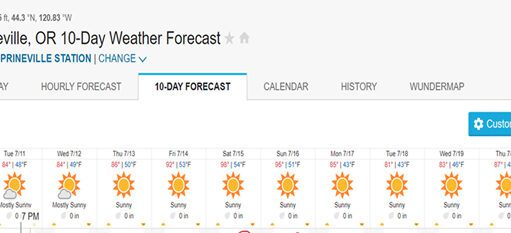
The decision is based on several factors: the dryness of the forest area around Indian Trail Spring, the 14 day forecast prior to OSP, whether they have closed forest to the public and if level IV restrictions are in place.
Please check back to this area for the lastest information concerning the use of generators at OSP.
| Item | Early Registration |
Regular Registration |
|---|---|---|
| Registration Adult | $55.00 | $75.00 |
| Registration 12-17 | $15.00 | $25.00 |
| Registration 6-11 | $5.00 | $15.00 |
| Registration 0-5 | $0.00 | $0.00 |
| Vendor Fee | $110.00 | $150.00 |
| T-Shirts (all sizes) | $15.00 | N/A |
| T-Shirts (long sleeve all sizes) | $20.00 | N/A |
| Full Zipper Hoodie (all sizes) | $30.00 | N/A |
| Shower | $10.00 | $10.00 |
| Sm Photo | $12.00 | $12.00 |
| Lg Photo | $16.00 | $16.00 |
| Digital Photo | $5.00 | $5.00 |
| Star Dinner | $11.00 | N/A |
Forest Service & Fire Information
We are grateful to all our vendors and door prize donors. Check them out on the Vendor Page
Pre-registration is now open.
Volunteers: We need your help! Sign up before July 1 and get a free Caldwell Buck, good at the Espresso Blast Volunteer Page
Website: Please let us know what you think about our new website. Do you like the new look? Ease of finding the information you need? All comments are welcome. Feedback Page